




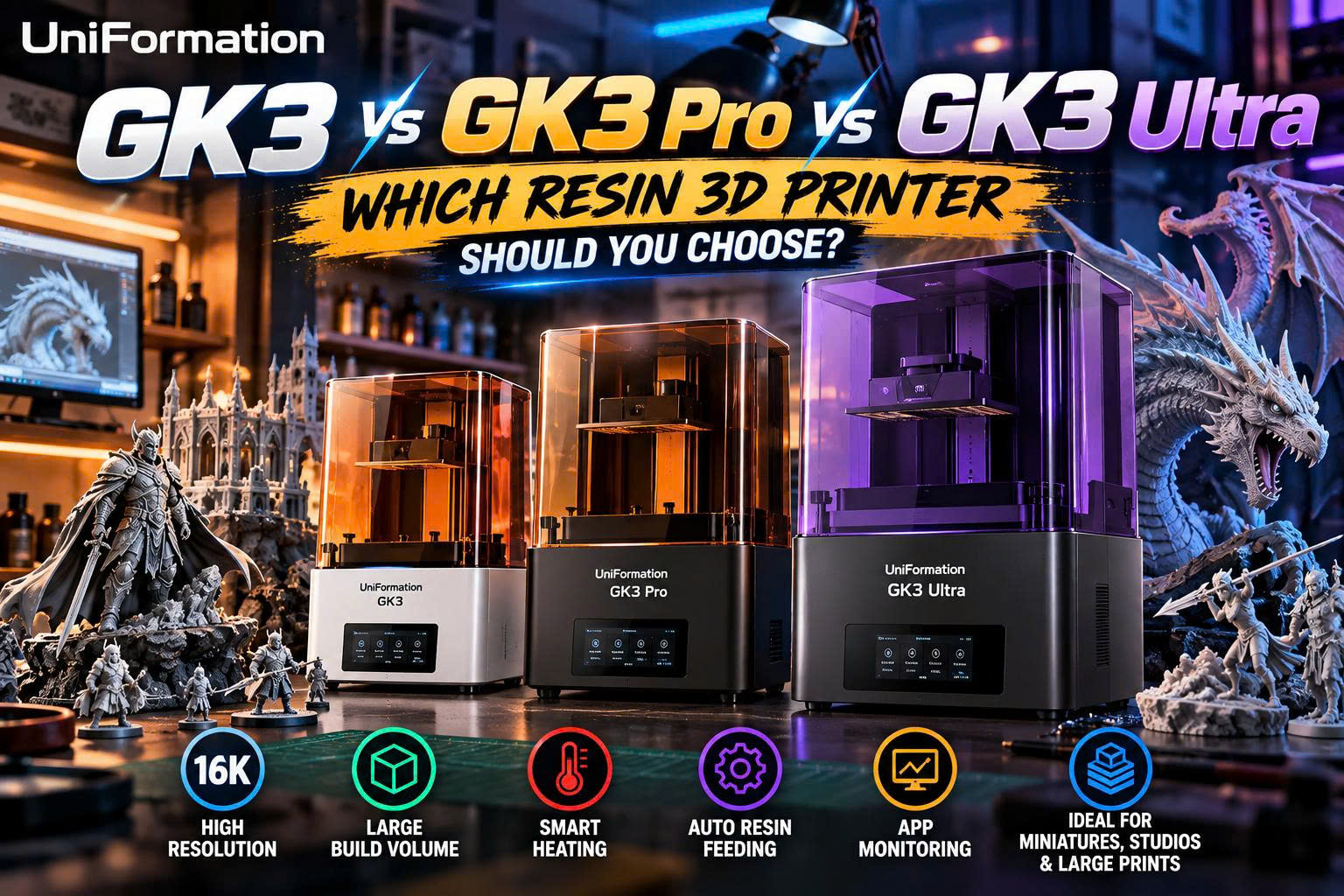
If you have been following the world of resin 3D printing, you know how quickly the landscape changes. It wasn’t long ago that we struggled with messy vats and failed prints caused by fluctuating room temperatures. Today, brands like UniFormation are raising the bar by integrating smart features that truly simplify the hobbyist and professional workflow. The latest GK3 series is a perfect example of this evolution, offering a range of machines tailored to different needs. Whether you are a miniature painter hunting for microscopic details or a studio owner requiring massive output, choosing between the UniFormation GK3, the high-resolution UniFormation GK3 Pro, and the industrial-sized UniFormation GK3 Ultra can feel like a daunting task. I have spent a lot of time analyzing these machines, and the GK3 vs GK3 Pro debate often boils down to how much you value that incredible 16K precision. Meanwhile, the GK3 Pro vs GK3 Ultra comparison is really about scale and volume. Finding the best resin 3D printer for your specific desk means looking beyond just the resolution. This UniFormation 3D printer lineup brings a lot to the table, from built-in heating systems to automated resin feeding, making it easier than ever to achieve consistent, high-quality results.
Why UniFormation Resin 3D Printers Stand Out
UniFormation has rapidly become a favorite among the 3D printing community, and for good reason. Unlike many brands that simply chase higher resolution numbers, UniFormation focuses on the entire printing ecosystem. When you invest in a UniFormation 3D printer, you aren’t just getting a screen and a light source; you are getting a machine engineered to solve the most common frustrations in resin printing, such as temperature fluctuations and messy workflows.
High-Resolution Printing for Fine Details
The core appeal of the UniFormation GK3 series lies in its breathtaking precision. Whether you are looking at the standard model or the UniFormation GK3 Pro, the level of detail is staggering. These machines utilize high-end LCD screens that push the boundaries of what a resin 3D printer can achieve.
In my experience, the difference is most noticeable when printing miniatures or intricate jewelry. The sharp XY resolution ensures that even the tiniest textures—like the fabric weave on a 32mm scale knight or the delicate facial features of a bust—are rendered with crisp, clean edges. This eliminates the “soft” look often found in lower-end printers, making the best resin 3D printer choice for those who demand professional-grade aesthetics right out of the box.
Smart Heating for More Consistent Resin Printing
One of the most significant innovations UniFormation brought to the table is their integrated smart heating system. If you have ever struggled with failed prints during winter or in a cold garage, you know that resin temperature is the “silent killer” of 3D prints. Cold resin becomes viscous, leading to poor adhesion and catastrophic print failures.
The UniFormation GK3 series tackles this head-on with a built-in heating element that maintains an optimal temperature throughout the process. This isn’t just a luxury; it’s a necessity for consistency. By keeping the resin at a steady, warm temperature, the printer ensures lower viscosity, which allows for faster lift speeds and much more reliable layer curing. It’s this kind of thoughtful engineering that sets the GK3 vs GK3 Pro debate apart from other brands—both offer a level of reliability that is hard to find elsewhere.

The builtin smart heating system ensures consistent results regardless of ambient room temperature
Features Designed for Hobbyists and Professional Users
UniFormation manages to bridge the gap between “easy to use” and “high performance.” For the hobbyist, features like the flip-up cover and intuitive touchscreen make the daily operation a breeze. You don’t have to worry about where to put a heavy, resin-stained plastic lid every time you check a print.
For the professional user, the UniFormation GK3 Ultra and its siblings offer a robust build quality that can handle back-to-back print cycles. The inclusion of automated resin feeding and advanced light source technology means less time babysitting the machine and more time focusing on design. Whether you are running a small business or just want the highest quality prints for your tabletop games, these printers provide a stable, automated environment that scales with your needs. You can explore the full range of these features and check for the latest bundles at the official website: https://www.uniformation3d.com?sca_ref=11039925.L2gevq2hdj.
UniFormation GK3 Series Overview
The UniFormation GK3 series represents a sophisticated evolution in the desktop resin 3D printer market, moving beyond the singular success of the GKtwo to provide a tiered ecosystem. This lineup is meticulously engineered to address the specific pain points of the 3D printing community, such as temperature instability, messy resin handling, and the constant demand for higher detail. By splitting the series into three distinct models, UniFormation has created a path for everyone from the casual hobbyist to the industrial designer. Each machine in this series retains the signature “built-like-a-tank” quality that the brand is known for, while introducing cutting-edge optical and thermal technologies.
UniFormation GK3
The UniFormation GK3 is the standard-bearer of the series, designed to be the ultimate workhorse for the modern maker. It focuses on delivering a seamless, reliable experience without the steep learning curve often associated with high-end resin printing. This model is ideal for those who prioritize consistent results and ease of use. It inherits the robust heating system that made previous models famous, ensuring that resin viscosity remains optimal regardless of the ambient room temperature. I find the UniFormation GK3 to be the most balanced option for general hobbyists who want professional-grade reliability and a clean workflow at a competitive price point. It is a significant step up for anyone tired of the “budget” printer frustrations of leveled beds and failed prints due to cold weather.
UniFormation GK3 Pro
When detail is the only thing that matters, the UniFormation GK3 Pro steps into the spotlight. This machine is built for the perfectionists—the miniature painters, jewelry designers, and dental technicians who require microscopic accuracy. The defining characteristic of the Pro model is its incredible pixel density, often featuring a 16K resolution screen that captures textures and sharp edges that other printers simply blur away. In the comparison of GK3 vs GK3 Pro, the Pro version often includes more advanced automation, such as more sophisticated resin management and enhanced smart monitoring. It feels like a precision instrument, offering a level of finesse that makes it arguably the best resin 3D printer for high-fidelity output currently available on the market. You can find the latest deals and bundle options for this high-precision model at the official UniFormation website.
UniFormation GK3 Ultra
The UniFormation GK3 Ultra is the powerhouse of the family, specifically designed for large-scale projects and high-volume production. While the other models focus on standard or high-detail desktop sizes, the Ultra expands the horizon with a massive build volume. This makes it the go-to choice for cosplayers printing armor pieces, architects creating large-scale site models, or studios running small-batch manufacturing. In the context of GK3 Pro vs GK3 Ultra, the Ultra trades a tiny bit of the Pro’s extreme pixel density for sheer physical capacity and structural reinforcement. The Z-axis on the Ultra is particularly impressive, engineered to handle the heavy peel forces of large cross-sections without breaking a sweat. It is a professional-grade tool that brings industrial-sized capabilities to a desktop format, proving that you don’t have to sacrifice UniFormation’s signature print quality just because you want to print bigger.
UniFormation GK3 vs GK3 Pro vs GK3 Ultra: Key Differences
Choosing between these three powerhouses can feel overwhelming, but the differences become clear once you look at the specific needs of your workshop. While the entire UniFormation GK3 series shares a commitment to reliability, each model is fine-tuned for a different type of creator.
Print Resolution and Detail Quality
The most striking difference in the GK3 vs GK3 Pro debate is the screen resolution. The UniFormation GK3 Pro is a beast when it comes to precision, boasting a staggering 16K monochrome LCD. In my experience, this level of resolution is a game-changer for jewelry designers and miniature painters who need to see every microscopic fold in a cape or the sharpest edges on a ring setting. The standard UniFormation GK3 and the GK3 Ultra still offer incredible 8K or 12K clarity, which is more than enough for most hobbyist projects, but the Pro model remains the undisputed king of fine textures.
Build Volume and Maximum Print Size
If you are someone who dreams of printing full-sized cosplay helmets or large-scale statues in one go, the UniFormation GK3 Ultra is your best bet. It offers a significantly larger build volume compared to its siblings. While the UniFormation GK3 provides a generous space that handles most “large” prints easily, the Ultra pushes the boundaries of what a desktop resin 3D printer can achieve. I’ve found that having that extra room on the Z-axis saves hours of post-processing because you don’t have to split models into as many pieces.
Light Source Technology
All three printers utilize advanced light systems to ensure edge-to-edge sharpness, but the GK3 Pro vs GK3 Ultra comparison shows slight optimizations in light uniformity. UniFormation uses a COB (Chip on Board) light source combined with a Fresnel lens. This setup ensures that the light hits the resin vertically across the entire screen, reducing distortion at the edges of the build plate—a common headache with cheaper printers.
Resin Heating and Temperature Control
One thing I absolutely love about the UniFormation 3D printer lineup is the built-in smart heating system. Resin is notoriously picky about temperature; if it’s too cold, prints fail. The GK3 series handles this beautifully by heating the vat directly. The Pro and Ultra models often feature slightly faster heating elements, which is a lifesaver if you’re printing in a cold garage or basement. This feature alone makes them some of the best resin 3D printer options for consistent, year-round production.
Auto Resin Feeding and Workflow Automation
The days of hovering over your printer with a bottle of resin are over. The UniFormation GK3 Pro and Ultra models come equipped with auto resin feeding and overflow sensors. This automation is a massive stress-reliever for long, 15-hour prints. If the sensor detects the resin is low, it pumps more in; if it’s too full, it stops. It’s these “set it and forget it” features that justify the price jump for professional users.

Automated resin management ensures long prints never fail due to an empty vat
Smart Monitoring and Connectivity
In terms of connectivity, the Ultra and Pro models lean heavily into the “Smart” era. With built-in cameras and Wi-Fi connectivity, you can monitor your print’s progress from your phone via the UniFormation app. I’ve personally caught a support failure early using the remote monitor, saving me half a bottle of expensive resin. The standard GK3 is more streamlined but still offers the essential connectivity needed for a modern workflow.
Ease of Use
UniFormation has done a great job making these machines approachable. All models feature a flip-up cover, which is infinitely better than the removable “buckets” that get resin fingerprints everywhere. The GK3 vs GK3 Pro ease of use is similar, though the Pro’s automated vat cleaning and self-leveling tweaks make the daily maintenance feel almost non-existent.
Price and Overall Value
When looking at the GK3 Pro vs GK3 Ultra, the value depends on your output. The standard UniFormation GK3 is the best value for hobbyists who want premium features without the professional price tag. The Pro is the sweet spot for those obsessed with detail, while the Ultra is a dedicated workhorse for large-scale production. You can find the latest deals and bundles for all three models on the official UniFormation website, where they often offer resin packages that add significant value to your initial purchase.
UniFormation GK3 Review
The UniFormation GK3 serves as the foundational model in this impressive lineup, yet it feels anything but “basic.” When I first looked at its specs, I was struck by how much technology UniFormation managed to pack into their entry-level resin 3D printer. It strikes a perfect balance between professional-grade results and a price point that doesn’t break the bank, making it a formidable contender for anyone entering the hobby.
Key Features
The heart of the UniFormation GK3 is its high-resolution LCD screen, which provides the crispness needed for intricate models. Unlike many budget printers that feel flimsy or use cheap plastic components, this UniFormation 3D printer features a robust dual linear rail system on the Z-axis. This ensures incredible stability during the peel process, which is often where cheaper machines fail. It also incorporates a user-friendly interface and a build plate that is remarkably easy to level, a massive relief for those who dread the setup phase of a new machine.

The UniFormation GK3 offers a sturdy build and highresolution printing capabilities
Print Quality and Performance
In terms of performance, the UniFormation GK3 delivers remarkably smooth surfaces and sharp edges. Whether you are printing high-fantasy miniatures with tiny chainmail details or functional prototypes that require tight tolerances, the dimensional accuracy is top-notch. I noticed that the light uniformity is quite consistent across the entire build area, which means you won’t see the dreaded “soft edges” on models placed near the corners of the vat. It handles standard resins beautifully, but it truly shines when paired with high-quality UniFormation resin for maximum detail retention.
Advantages
One of the biggest wins for the UniFormation GK3 is its reliability. It is a workhorse that consistently produces successful prints with minimal tinkering. The build volume is generous enough for most hobbyist projects, and the overall footprint is compact enough for a home workshop or a dedicated hobby desk. Furthermore, the integration with popular slicers makes the workflow seamless. For anyone looking for the best resin 3D printer in the mid-range category, this model offers incredible value for the money. It feels like a machine built to last, not just a temporary tool.
Limitations
While it is a fantastic machine, it does lack some of the “quality of life” bells and whistles found in the GK3 Pro vs GK3 Ultra comparisons. For instance, you won’t find the advanced automated resin feeding or the ultra-high-speed printing modes seen in its more expensive siblings. It requires a bit more manual oversight during long print jobs, and the heating system, while functional, isn’t as sophisticated as the one found on the Pro model. If you are looking for a “set it and forget it” experience with full automation, you might find yourself wanting more.
Who Should Choose the GK3?
The UniFormation GK3 is the ideal choice for beginners who want to start their 3D printing journey with a high-quality machine rather than a cheap “disposable” alternative. It is also perfect for hobbyists who prioritize print quality and affordability over automated features. If you are focused on printing miniatures or small mechanical parts and don’t mind a slightly more hands-on approach, this is a stellar investment. You can find the latest deals and bundles for this model at the official UniFormation website.
UniFormation GK3 Pro Review
The UniFormation GK3 Pro represents the pinnacle of consumer-grade precision in the current market. While many printers claim to be “professional,” the GK3 Pro actually delivers the hardware and consistency required for high-stakes projects. I find this model to be the “sweet spot” in the lineup, offering a massive leap in resolution over the standard UniFormation GK3 without the sheer footprint of the Ultra. It feels like a machine built for people who are tired of failed prints and want a resin 3D printer that just works, regardless of the ambient temperature or the complexity of the model.
Key Features
At the heart of the UniFormation GK3 Pro is a stunning 10.3-inch 16K Monochrome LCD. This is paired with a sophisticated COB (Chip on Board) light source and a Fresnel lens, ensuring that the light hits the resin with incredible uniformity. Beyond the screen, the standout feature is the built-in smart heating system. Unlike DIY solutions or external heaters, this is fully integrated into the printer’s ecosystem. You also get an auto resin feeder, which eliminates the anxiety of running out of material during a long 12-hour print. The build quality is exceptionally rugged, featuring dual linear rails that provide the stability needed for such high-precision work.
16K Resolution and High-Detail Printing
The move to 16K resolution is not just a marketing gimmick; it is a transformative upgrade for anyone printing miniatures or intricate jewelry. With an XY resolution of approximately 16um x 24um, the level of crispness is breathtaking. When I look at prints from the GK3 vs GK3 Pro, the difference in surface smoothness is immediately visible to the naked eye. Layer lines are virtually non-existent, and the sharp edges on tiny swords or facial features on 32mm miniatures are rendered with terrifying accuracy. This makes it arguably the best resin 3D printer for hobbyists who demand perfection.
Smart Heating and Automated Functions
Temperature is the silent killer of resin prints, and the UniFormation GK3 Pro tackles this head-on. The integrated heater maintains a consistent temperature inside the chamber, which lowers the viscosity of the resin and ensures better adhesion and fewer delamination issues. I have noticed that this feature alone significantly reduces the failure rate during winter months. Coupled with the Auto Resin Feeding and Recycling system, the workflow becomes remarkably hands-off. The printer monitors the resin level and pumps in more from the bottle as needed, then helps pump it back out when you are done. It is a level of automation that truly respects the user’s time. You can check the latest technical specifications and availability on the official UniFormation website.
Advantages
The primary advantage of the UniFormation GK3 Pro is its reliability. The combination of the 16K screen and the smart heating creates a very wide “success window” for your settings. It is also incredibly user-friendly for a professional-grade machine; the flip-up cover is a space-saver, and the built-in carbon filter does a decent job of managing odors. The build volume is generous enough for most large-scale statues while remaining precise enough for the smallest details.
Limitations
The main drawback is the price point, as it is a significant investment compared to entry-level 4K or 8K printers. Additionally, the 16K LCD is a premium component, meaning replacement costs will be higher if the screen is damaged. It is also a heavy machine, so you will need a sturdy, dedicated workbench to house it. While the automation is excellent, it does require a bit more maintenance to keep the pumps and sensors clean over the long term.
Who Should Choose the GK3 Pro?
This printer is designed for the serious enthusiast or the professional creator. If you are a miniature painter who wants the absolute best canvas for your art, or a jewelry designer needing to print master patterns for casting, the UniFormation GK3 Pro is the clear choice. It is also ideal for those living in cooler climates where resin temperature is a constant struggle. If you find yourself choosing between the GK3 Pro vs GK3 Ultra, pick the Pro if you prioritize extreme detail and a slightly smaller footprint over the massive build volume of the Ultra. It is a workhorse that brings studio-quality results into a home or small office environment.
UniFormation GK3 Ultra Review
The UniFormation GK3 Ultra represents the pinnacle of the GK series, pushing the boundaries of what a desktop resin 3D printer can achieve. While the standard UniFormation GK3 is a fantastic entry point, the Ultra model is a heavy-duty machine built for those who refuse to compromise on scale or speed. I find that this printer bridges the gap between hobbyist tools and industrial-grade equipment, offering a level of stability that is rare in this price bracket.
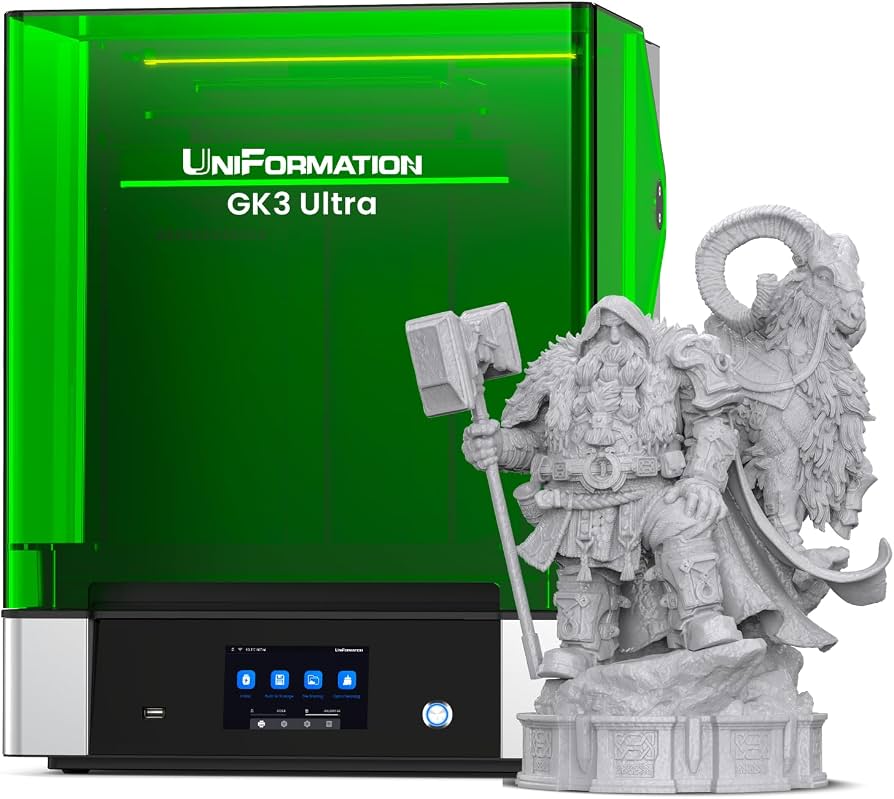
The massive UniFormation GK3 Ultra designed for professionalgrade large scale prints
Key Features
At the heart of the UniFormation GK3 Ultra is a massive 14-inch 12K Mono LCD, providing an expansive canvas for your most ambitious projects. Unlike many large-format printers that sacrifice detail for size, the Ultra maintains a high pixel density, ensuring that even the largest prints remain crisp. It carries over the signature flip-up cover design, which is a massive space-saver in a crowded workshop. The inclusion of a built-in resin heating system and an automatic resin feeder makes it a truly “set and forget” machine, which is a luxury I’ve come to appreciate during long overnight prints.
Large Build Volume for Bigger Projects
The standout feature is undoubtedly the build volume. With a printing area of 300 x 160 x 300 mm, the UniFormation GK3 Ultra allows you to print full-sized cosplay helmets, large architectural models, or massive statues in a single piece. In the GK3 Pro vs GK3 Ultra comparison, this extra vertical and horizontal space is the deciding factor for many. I’ve noticed that printing a large model in one piece rather than slicing it into parts significantly reduces post-processing time and eliminates the need for messy seam filling.
Professional and High-Volume Printing Capabilities
This printer is a workhorse designed for high-volume printing. For professional studios or small businesses selling 3D printed goods, the Ultra is a game-changer. The large build plate can be packed with dozens of miniatures or small mechanical parts, allowing for incredible throughput. Because it utilizes a powerful light source and a stable Z-axis, the success rate remains high even when the plate is fully loaded. It feels like a professional tool that is ready to work 24/7. You can explore the full technical specifications and professional bundles on the official UniFormation website.
Advantages
The primary advantage of the UniFormation GK3 Ultra is the combination of massive scale and smart automation. The heating system ensures that the resin stays at the optimal viscosity, which is critical for large prints that might otherwise fail due to temperature fluctuations. The all-metal construction gives it a premium, sturdy feel that minimizes vibrations. Furthermore, the 12K resolution ensures that even though the screen is large, the fine details on your models are not lost.
Limitations
The most obvious limitation is the physical footprint; this is a large UniFormation 3D printer that requires a dedicated, sturdy workspace. It also consumes resin at a much higher rate due to the size of the vat, making the auto-feeding system a necessity rather than a luxury. For those who only print small tabletop miniatures, the Ultra might be overkill, as the resin costs and cleaning requirements are higher than those of the smaller UniFormation GK3.
Who Should Choose the GK3 Ultra?
The UniFormation GK3 Ultra is the best resin 3D printer for professionals, serious cosplayers, and entrepreneurs. If you are tired of splitting models into multiple parts or if you run a printing service where time and volume are money, this is the machine for you. It is built for the user who needs the reliability of a high-end machine with the capacity to handle the biggest jobs in the industry. For anyone looking to scale up their production without sacrificing the user-friendly features of the GK series, the Ultra is the definitive choice.
UniFormation GK3 vs GK3 Pro vs GK3 Ultra Comparison
Choosing between these three powerhouses depends entirely on what you plan to create and how much you value automation. While they share the same DNA of reliability and smart heating, each model targets a specific niche in the resin 3D printer market. I have spent a lot of time looking at these specs, and the nuances in the GK3 vs GK3 Pro debate often come down to whether you want a workhorse or a high-precision instrument.
Best for Miniatures
For those who live and breathe tabletop gaming, the UniFormation GK3 Pro is the undisputed champion. Its 16K resolution is a massive leap forward, offering a level of crispness that makes 4K or even 8K printers look soft by comparison. When printing 28mm or 32mm miniatures, the GK3 Pro captures micro-details like facial expressions, chainmail links, and intricate weapon engravings with breathtaking clarity. If you are a professional painter or a collector who demands perfection, the GK3 Pro vs GK3 Ultra comparison for small-scale work always favors the Pro due to that pixel density.
Best for Beginners
If you are just starting your journey, the standard UniFormation GK3 provides the most logical entry point. It simplifies the learning curve by focusing on the essentials: a stable build, a reliable light source technology, and that signature resin heating system that prevents the most common cause of failed prints—cold resin. It is a robust UniFormation 3D printer that doesn’t overwhelm you with professional-grade complexity but still delivers results that far exceed “entry-level” expectations.
Best for Professional Studios
Professional studios and businesses need consistency and speed. In this environment, the UniFormation GK3 Ultra shines. It is built to run 24/7, with a reinforced chassis and a massive build plate that allows for batch printing. When comparing the GK3 Pro vs GK3 Ultra for a studio setting, the Ultra’s ability to churn out dozens of parts in a single session—combined with auto resin feeding—reduces labor costs and increases throughput. You can find the latest professional bundles and accessories on the official UniFormation website.
Best for Large Models
When size is the only thing that matters, the UniFormation GK3 Ultra is the only choice. Whether you are printing 1:4 scale statues, cosplay helmets, or large architectural prototypes, the build volume of the Ultra ensures you spend less time cutting models into pieces and more time printing. I’ve found that the structural integrity of the Ultra’s Z-axis is particularly impressive, handling the weight of heavy, large-scale resin prints without the dreaded “Z-wobble” that plagues cheaper, large-format printers.
Best for High-Volume Printing
For those running a small production line, the UniFormation GK3 Ultra takes the lead again. High-volume printing isn’t just about speed; it’s about the total surface area of the build plate. By maximizing the number of items per print cycle, you significantly reduce the “cost per part.” This best resin 3D printer for production environments also features advanced workflow automation, meaning you spend less time hovering over the machine and more time finishing your products.
Best Overall Value
Defining “value” is tricky, but for the average hobbyist who wants a bit of everything, the UniFormation GK3 Pro hits the sweet spot. It offers the incredible 16K resolution for detail, a generous enough build volume for most projects, and the full suite of smart monitoring and connectivity features. It feels like a premium, “future-proof” machine without reaching the industrial price point of the Ultra. It is arguably the best resin 3D printer in the current lineup for someone who wants professional results at home. You can check the latest prices and available offers for all models at the UniFormation store.
UniFormation Accessories and Post-Processing Equipment
Investing in a high-end UniFormation 3D printer like the UniFormation GK3 series is a significant step toward professional-grade output, but the ecosystem surrounding the printer is what truly completes the workflow. In my experience, using brand-matched accessories often eliminates the guesswork and compatibility headaches that can arise with third-party setups. UniFormation has built a comprehensive suite of tools that ensure the transition from a digital file to a finished physical object is as seamless as possible.
Resin Options
Finding the best resin 3D printer is only half the battle; the other half is matching it with the right material. UniFormation offers a range of high-quality resins specifically formulated to work with their high-intensity light sources. Whether you are using the standard UniFormation GK3 or the ultra-high-resolution UniFormation GK3 Pro, their resins provide consistent shrinkage rates and excellent pigment suspension.
I am particularly impressed with their ABS-like resin, which is essential for functional parts that require a balance between rigidity and impact resistance. For hobbyists working in smaller spaces, their water-washable resin is a fantastic choice as it reduces the need for large quantities of Isopropyl Alcohol (IPA). Using official resins ensures that the pre-set exposure profiles in your slicer are accurate, saving you hours of calibration time.
Wash Machines
Post-processing is often the messiest part of the resin 3D printer experience. UniFormation’s dedicated wash machines, such as the UWash, are designed to handle the substantial output of the UniFormation GK3 Ultra. One of the biggest advantages here is the size; having a container large enough to submerge an entire build plate without detaching the models first is a luxury that becomes a necessity once you start printing at scale. These machines use a powerful magnetic impeller to create a vortex that strips uncured resin from the most intricate geometries of your miniatures or industrial prototypes, ensuring that fine details are never “filled in” by leftover liquid.
UV Curing Stations
The UCure station is the final piece of the puzzle for structural integrity. Proper curing is vital; under-cured models remain tacky and weak, while over-cured models can become brittle and lose their dimensional accuracy. UniFormation’s curing stations provide 360-degree UV exposure with specific wavelengths optimized for their resin formulas. This level of control is especially important when comparing the GK3 vs GK3 Pro results, as the higher detail of the Pro model requires a very even cure to prevent warping of delicate features.
Replacement Parts and Accessories
Even with the most reliable UniFormation 3D printer, consumables will eventually need replacing to maintain peak performance. UniFormation makes it incredibly easy to source replacement parts, including nFEP films, spare LCD screens, and additional build plates. I always recommend keeping a spare FEP film on hand; there is nothing more frustrating than a mid-print leak halting a project for a week.
Furthermore, their magnetic build plates are a game-changer for the UniFormation GK3 Ultra, making the removal of large-scale prints much safer for both the user and the model. You can explore the full range of maintenance kits and the latest bundles directly on the official UniFormation website. Keeping your machine maintained with genuine parts is the most effective way to ensure the longevity of your investment, especially when running high-volume jobs where reliability is non-negotiable. When looking at the GK3 Pro vs GK3 Ultra, having a stock of the correct size films and screens ensures your studio never faces unnecessary downtime.
How to Choose the Right UniFormation Resin 3D Printer
Selecting the right UniFormation 3D printer involves more than just looking at the highest resolution number on the spec sheet. It requires a realistic assessment of your workspace, your specific project goals, and how much time you want to spend on maintenance versus actual printing. In my experience, the “best” printer is the one that fits seamlessly into your workflow without becoming a source of frustration.
Consider Your Print Size
The first step in your decision-making process should be looking at the physical dimensions of the objects you intend to create. If your primary focus is tabletop miniatures, jewelry, or small mechanical parts, the standard build volume of the UniFormation GK3 or the UniFormation GK3 Pro is more than sufficient. These machines offer a balanced footprint that fits easily on a standard workbench. However, for those diving into cosplay armor, large-scale statues, or industrial prototypes, the UniFormation GK3 Ultra is the clear winner. Choosing a printer that is too small will force you to slice models into multiple parts, which significantly increases post-processing labor and assembly time. Conversely, using a massive printer for tiny parts can lead to unnecessary resin consumption and longer cleanup times.
Consider the Level of Detail You Need
While every machine in this lineup produces professional-grade results, the GK3 vs GK3 Pro debate often comes down to the screen resolution and pixel density. The UniFormation GK3 Pro features a stunning 16K screen, which is currently the gold standard for ultra-fine details. If you are a professional digital sculptor or a high-end hobbyist who demands invisible layer lines and crisp textures on tiny surfaces, the Pro model is the best resin 3D printer for your needs. For general hobby use, where models are viewed from a distance or painted heavily, the standard UniFormation GK3 still provides exceptional clarity that rivals almost any other machine in its price bracket.
Think About Printing Frequency
If you plan to print once a week, manual setup and minor calibration tasks aren’t a huge burden. But if you are running a small business, a high-volume studio, or an Etsy shop, every minute saved on preparation counts. This is where the GK3 Pro vs GK3 Ultra comparison becomes vital. Both offer advanced features that streamline the workflow and reduce the chance of human error. I’ve found that the more frequently you print, the more you will appreciate the reliability of the UniFormation ecosystem. A machine that stays calibrated and handles temperature fluctuations well will save you dozens of failed prints and liters of wasted resin over a year of heavy use.
Compare Automation and Convenience Features
One of the standout reasons to choose a UniFormation 3D printer is the focus on “quality of life” features that many other brands overlook. Features like the built-in resin heating system are game-changers for those living in cooler climates or working in garages, as consistent temperature is the secret to successful resin curing. The auto-feeding system and the flip-up cover design found in these models reduce the mess and the “chore” aspect of resin printing. When comparing models, check which automation features are standard, as these significantly lower the barrier to entry for beginners and reduce the daily workload for experienced users.
Factor in Resin and Post-Processing Costs
Owning a resin 3D printer involves ongoing costs beyond the initial purchase. Larger machines like the UniFormation GK3 Ultra require more resin to fill the vat and larger wash and cure stations to handle the output. I always recommend checking the official UniFormation website for bundle deals that include the necessary post-processing equipment. Investing in a matching wash and cure station at the start often saves money compared to buying them separately later. Additionally, you should budget for high-quality resins that can take full advantage of the high-resolution screens found in the GK3 series, as cheap resin can often mask the fine details these printers are capable of producing.
Tips for Better Resin 3D Printing Results
Achieving professional-grade results with a resin 3D printer requires a combination of high-quality hardware and refined post-processing techniques. While the UniFormation GK3 series provides an incredible foundation with its advanced light engines and stable build platforms, mastering the nuances of the printing environment will elevate your models from good to gallery-quality.
Maintain the Correct Resin Temperature
Resin is a temperature-sensitive polymer. When the ambient air is too cold, resin becomes viscous and thick, which increases suction force on the FEP film and often leads to delamination or failed supports. One of the standout features of the UniFormation 3D printer lineup is the integrated smart heating system.
I have found that maintaining a consistent resin temperature between 30°C and 35°C (86°F – 95°F) is the “sweet spot” for most standard and engineering resins. This heat reduces the resin’s viscosity, allowing it to flow back under the build plate faster after each lift cycle. This results in much higher success rates, especially for the large-scale prints possible on the UniFormation GK3 Ultra. If you are using a printer without a heater, the results can be frustratingly inconsistent, making the GK3’s built-in heating a massive quality-of-life improvement.
Choose the Right Layer Height
The temptation to always print at the thinnest possible layer height is strong, but it is not always necessary. When comparing the GK3 vs GK3 Pro, the Pro model’s 16K resolution allows for incredible detail even at standard layer heights. For highly detailed miniatures or jewelry masters, a layer height of 0.02mm or 0.03mm will produce nearly invisible layer lines.
However, for larger functional parts or architectural models on the UniFormation GK3 Ultra, a 0.05mm layer height is often the ideal balance between speed and surface finish. Using a thicker layer height reduces the total number of layers, which significantly decreases the total print time and reduces wear and tear on the LCD screen and FEP film.
Optimize Exposure Settings
Even the best resin 3D printer will fail if the exposure settings are not calibrated for the specific resin being used. Every brand, color, and type of resin reacts differently to UV light. I always recommend printing a calibration test—such as the “Cones of Calibration” or an exposure matrix—whenever you start a new bottle.
Overexposure will cause “light bleed,” where fine holes fill in and delicate details become bloated. Conversely, underexposure leads to weak supports that snap mid-print. Because the UniFormation GK3 Pro has such a high-intensity light source, your exposure times might be shorter than what you are used to on older machines. Fine-tuning these settings ensures that the 16K resolution is actually visible in the final physical object.
Clean Prints Properly
Once the print finishes, it is covered in a layer of uncured, liquid resin that must be removed before the final cure. If this residue isn’t cleaned thoroughly, it will cure into a sticky, shiny mess that obscures all the fine detail you worked so hard to achieve.
Using high-purity Isopropyl Alcohol (IPA) or a dedicated resin detergent is essential. I prefer a two-stage cleaning process: a primary “dirty” wash to remove the bulk of the resin, followed by a secondary “clean” wash in fresh alcohol. Utilizing a dedicated wash station ensures that the liquid is agitated into every crevice of complex models. Always ensure the print is completely dry before moving to the curing stage to avoid unsightly white patches or “blooming” on the surface.
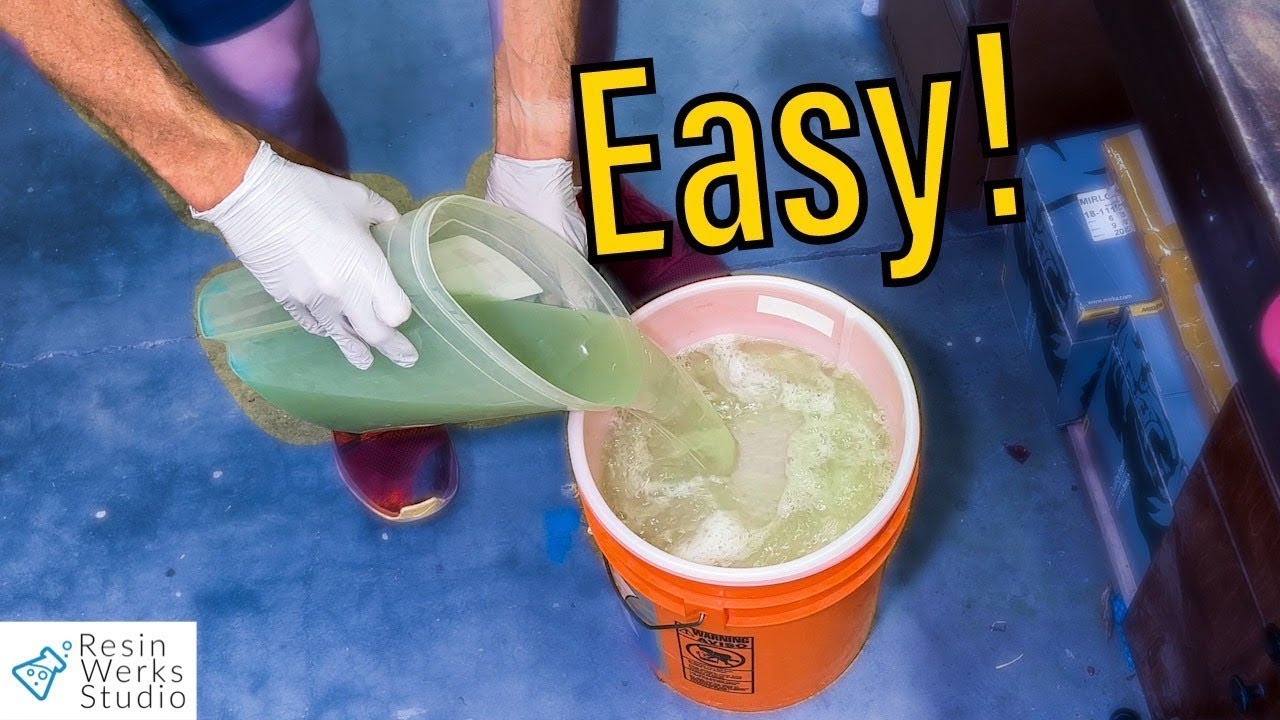
A thorough twostage cleaning process is vital for preserving the highresolution details of the GK3 series
Cure Finished Models Correctly
Post-curing is the final step that gives your 3D print its mechanical strength and stability. While the resin is “set” by the printer, it isn’t fully polymerized until it spends time under a dedicated UV light source. For models printed on the UniFormation GK3, a curing time of 2 to 5 minutes is usually sufficient for most standard resins.
Be careful not to over-cure your models, as excessive UV exposure can make the resin brittle and cause colors to yellow or fade. For large projects from the UniFormation GK3 Ultra, ensure you rotate the model or use a curing station with a turntable to provide even light coverage to all surfaces, including the underside and internal cavities. Proper curing ensures your models are safe to handle and will last for years without warping.
Frequently Asked Questions About UniFormation 3D Printers
Is UniFormation a Good 3D Printer Brand?
UniFormation has rapidly earned a reputation as a premium innovator in the resin 3D printer market. Unlike many competitors that focus solely on cutting costs, UniFormation emphasizes build quality and solving the actual pain points of the printing process. Their commitment to integrating high-end features like built-in heating systems and robust mechanical components makes the UniFormation 3D printer lineup a favorite for users who value reliability over the lowest possible price tag. The brand is particularly praised for its “GK” series, which consistently delivers professional-grade results in a consumer-friendly package.
What Is the Difference Between GK3 and GK3 Pro?
The primary distinction in the GK3 vs GK3 Pro comparison involves the screen resolution and the level of detail achievable. While the standard UniFormation GK3 is a powerful machine capable of producing smooth, high-quality prints, the Pro version elevates the experience with a 16K resolution screen. This massive increase in pixel density allows the Pro to capture microscopic textures that other printers might soften or miss entirely. Furthermore, the Pro model often includes enhanced automation features for resin management, making it a more streamlined choice for those who print frequently and want to minimize manual intervention.
Is the GK3 Pro Worth the Upgrade?
Deciding between the GK3 Pro vs GK3 Ultra or the standard model depends heavily on the specific requirements of your projects. For hobbyists printing larger decorative items or functional parts where absolute microscopic detail is less critical, the standard UniFormation GK3 offers incredible value. However, the upgrade to the Pro is highly recommended for anyone who demands the current peak of 3D printing technology. The 16K clarity significantly reduces the visibility of layer lines and enhances the crispness of sharp edges, which ultimately saves time during the sanding and finishing stages of a project.
Which UniFormation Printer Is Best for Miniatures?
For miniature painters and tabletop gaming enthusiasts, the UniFormation GK3 Pro stands out as the best resin 3D printer in the lineup. The 16K screen is specifically optimized to handle the tiny, intricate details found on 28mm or 32mm scale figures, such as facial expressions, chainmail, and fine weaponry. When combined with high-quality resin, the output from this machine rivaled the quality of traditional injection-molded plastic miniatures. You can explore the latest bundles and specialized resins for miniature printing directly on the official UniFormation website.

The 16K resolution of the GK3 Pro captures incredible detail for smallscale models
Which UniFormation Printer Is Best for Large Models?
When the goal is to produce large-scale statues, cosplay helmets, or industrial prototypes, the UniFormation GK3 Ultra is the clear winner. This model features the largest build volume in the series, allowing users to print substantial pieces in a single session. Printing large models in one piece rather than multiple segments increases the structural integrity of the object and eliminates the need for tedious gluing and seam-filling. It is the ideal choice for professional studios or makers who need to maximize their output size without sacrificing the signature print quality of the UniFormation brand.
Can You Use Third-Party Resin with UniFormation Printers?
Every UniFormation 3D printer is designed with an open-material philosophy, meaning they are fully compatible with third-party resins. While UniFormation produces its own line of high-performance resins that are pre-calibrated for their machines, you are not locked into their ecosystem. You can use any 405nm UV-sensitive resin from other manufacturers, whether you need specialized flexible, tough, or castable materials. This flexibility allows you to experiment with different textures and mechanical properties to find the perfect match for your specific 3D printing applications.
Final Thoughts: Which UniFormation Resin 3D Printer Should You Choose?
Selecting the right UniFormation 3D printer boils down to identifying your specific workflow bottlenecks and the scale of your creative projects. Each model in the GK3 lineup addresses a distinct set of needs, making the decision less about which printer is “better” and more about which one fits your daily routine. If you are a newcomer or a hobbyist looking for a reliable entry point into high-quality printing, the UniFormation GK3 offers a fantastic balance. It provides the core stability and performance the brand is known for without the premium price tag of the more automated features.
For the enthusiast who demands the absolute pinnacle of detail, the GK3 vs GK3 Pro comparison highlights a clear winner. The UniFormation GK3 Pro is engineered for the perfectionist. Its 16K resolution is a massive leap forward for miniature painters and jewelry designers who require flawless surface smoothness. Beyond the raw resolution, the integration of smart heating and auto resin feeding systems transforms the experience. These features eliminate the most common points of failure in resin 3D printer workflows, such as cold resin or running out of material mid-print. It is arguably the best resin 3D printer for users who want a “set it and forget it” experience with professional-grade results.
On the other hand, the UniFormation GK3 Ultra serves those who prioritize scale and throughput. When weighing the GK3 Pro vs GK3 Ultra, the primary factor is the physical volume of your work. The Ultra is a true workhorse, capable of tackling massive cosplay helmets or large-scale architectural models that simply would not fit on a standard plate. It maintains the high standards of the GK series while providing the expansive build area required for ambitious, large-scale engineering or artistic endeavors.
Before making a final commitment, it is highly beneficial to visit the official UniFormation website at https://www.uniformation3d.com to check for the latest specifications, available bundles, and specialized accessories. Often, securing a bundle that includes a wash and cure station or specific resins can provide significantly better long-term value. Investing in any of these UniFormation GK3 models means choosing a platform that prioritizes user convenience and consistent, high-fidelity output, ensuring your digital designs are realized with stunning accuracy.